When we think about workplace hazards, we usually picture falls, fires, or heavy machinery. But one of the most common risks in modern offices doesn’t involve any equipment at all — it’s the chair itself. Studies show that sitting for more than 95 percent of the workday significantly increases the risk of physical injury and disease, making it one of the most overlooked occupational health concerns of our time.
From the Farm to the Office
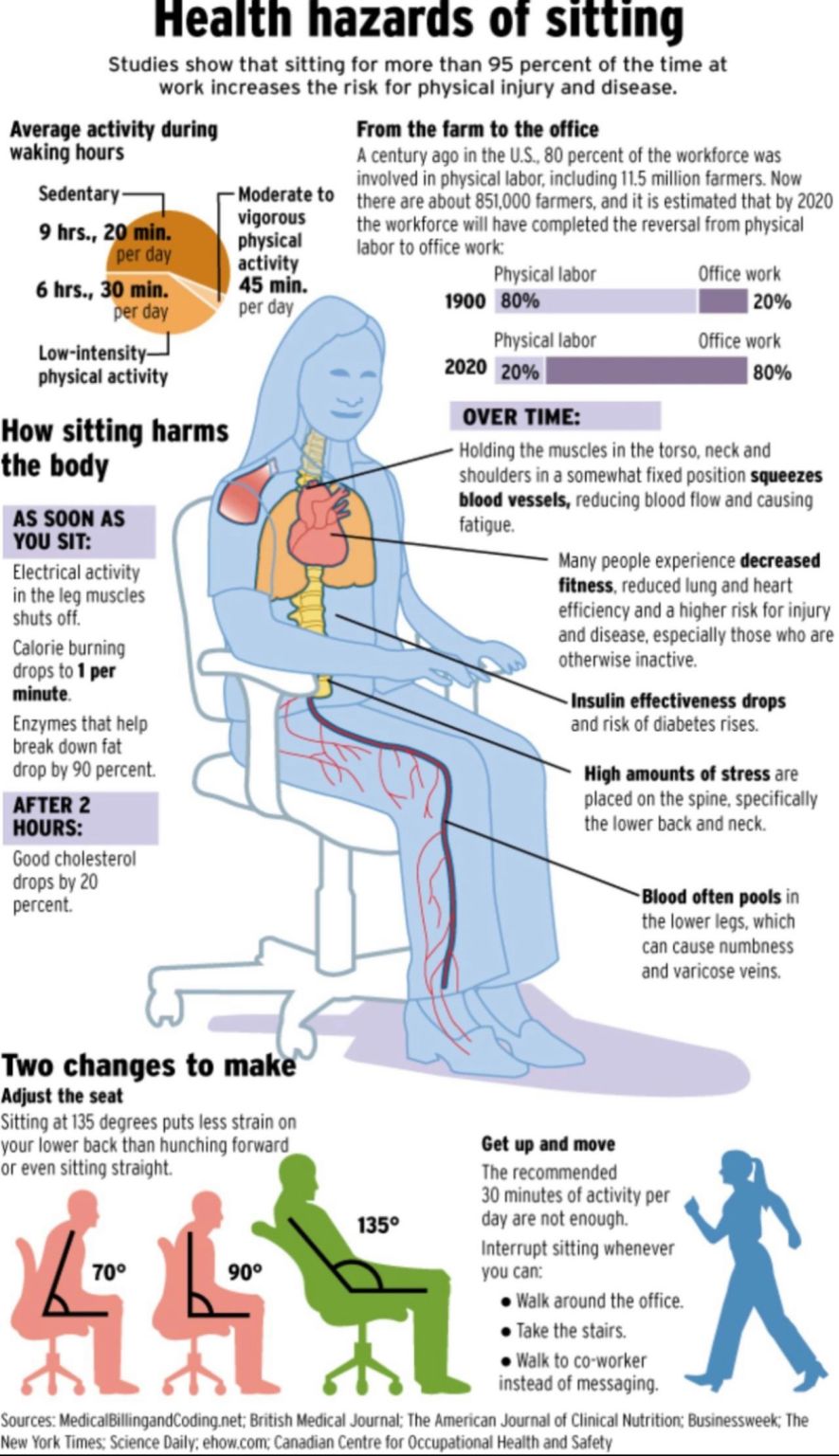
A century ago, physical labor defined the American workforce. In 1900, roughly 80 percent of workers were engaged in physical labor, including 11.5 million farmers, while only 20 percent held office jobs. By 2020, that ratio had completely reversed: nearly 80 percent of the workforce shifted to office-based roles, with physical labor now making up only around 20 percent. Today, there are fewer than 851,000 farmers left in the country.
This shift didn’t just change how we work — it changed how our bodies function during the workday. On an average day, people now spend about 9 hours and 20 minutes being sedentary, compared to just 6 hours and 30 minutes of low-intensity physical activity and a mere 45 minutes of moderate-to-vigorous activity.
What Happens to the Body When You Sit
The effects of prolonged sitting begin almost instantly and compound the longer you stay seated.
As soon as you sit down:
- Electrical activity in the leg muscles shuts off
- Calorie burning slows to roughly 1 calorie per minute
- Enzymes responsible for breaking down fat drop by as much as 90 percent
After just two hours:
- Good cholesterol (HDL) levels drop by 20 percent
Over time, the effects go far beyond metabolism. Holding the torso, neck, and shoulders in a fixed position squeezes blood vessels, restricting blood flow and causing fatigue. Many people also experience decreased cardiovascular and lung fitness, and a higher risk of injury and disease compared to those who stay active. Insulin effectiveness drops, raising the risk of diabetes, while high amounts of stress are placed on the spine — particularly the lower back and neck. Blood also tends to pool in the lower legs, which can lead to numbness and varicose veins.
Two Simple Changes That Make a Real Difference
The good news is that reducing these risks doesn’t require a complete lifestyle overhaul — just a few consistent habits.
1. Adjust Your Seating Posture
Sitting at a 135-degree recline puts significantly less strain on your lower back than sitting bolt upright at 90 degrees or, worse, hunching forward at 70 degrees. A slight recline allows your spine to maintain its natural curve and reduces the pressure placed on the lumbar region during long stretches of desk work.
2. Get Up and Move
The commonly recommended 30 minutes of daily activity is often not enough to offset hours of continuous sitting. The key is to interrupt sitting whenever possible:
- Walk around the office between tasks
- Take the stairs instead of the elevator
- Walk over to a colleague’s desk instead of sending a message
Small, frequent breaks in sitting time help restore blood flow, re-engage the leg muscles, and reduce the cumulative strain on the spine and cardiovascular system.
Why This Matters for Workplace Safety
Occupational health isn’t limited to visible hazards like falls, fire, or confined spaces — it also includes the everyday physical strain that builds up quietly over years of desk-based work. Organizations that build awareness of ergonomic risks alongside traditional safety training create healthier, more productive workplaces and reduce long-term costs associated with musculoskeletal injuries and chronic disease.
At Eduforce, our EHS training and consultancy programs are designed to help organizations identify and manage the full range of workplace risks — from high-hazard environments like work at height and confined spaces to everyday concerns like ergonomics and sedentary behavior. A safer workplace starts with understanding every risk your employees face, including the ones hiding in plain sight.