Mental health is a daily practice
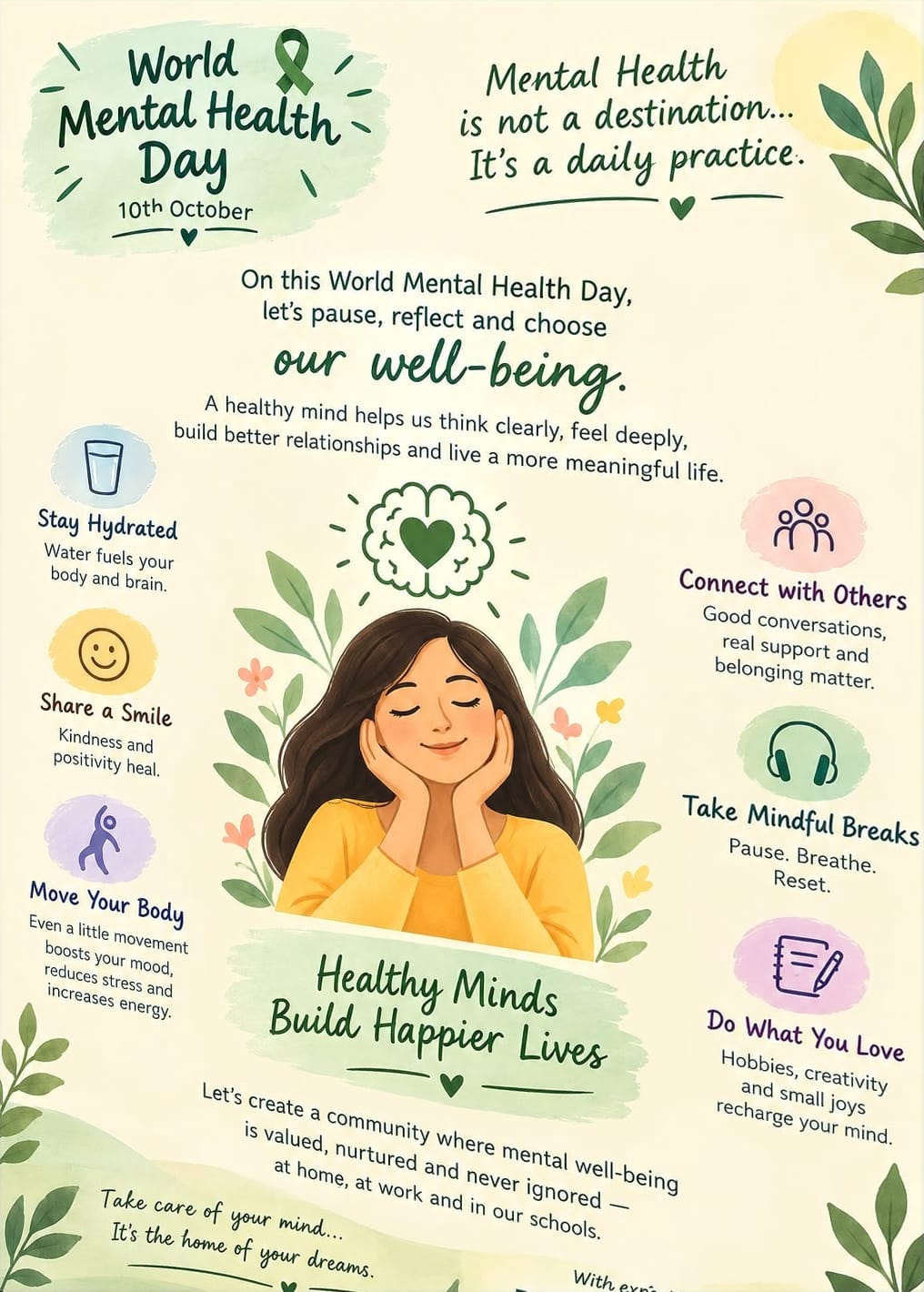
Today, 10 October, is World Mental Health Day. It is a day to pause, reflect and choose our well-being, not just once a year but every day.
A healthy mind helps us think clearly, feel deeply, build better relationships and live a more meaningful life. Yet many of us look after our bodies far more carefully than our minds.
The theme for 2026, set by the World Federation for Mental Health, is “Lived Experiences Heard: Real Voices, Real Change”. It asks us to listen to people who have lived with mental health challenges, and to let their experiences shape better care and support.
At Eduforce, we teach people to respond when someone’s body is in crisis. A mind in crisis deserves the same care, the same urgency and the same lack of shame.
Why it matters
More than 1 billion people worldwide live with a mental health condition, according to the World Health Organization. Anxiety and depression are among the leading causes of long-term disability.
In India, the picture is just as serious, as The Week reports:
- About 1 in 10 adults (10.6%) has a mental health condition, according to the National Mental Health Survey by NIMHANS.
- Up to 92% of people who need care do not receive proper treatment.
- The country has roughly 0.75 psychiatrists for every 1 lakh people.
Stigma, low awareness and a shortage of professionals keep many people silent. That is why everyday support from family, friends, colleagues and teachers matters so much.
Six small habits for a healthier mind
Good mental health is built through small things done every day. Here are six habits from our World Mental Health Day poster, with simple ways to start.
- Stay hydrated. Water fuels your body and your brain. Even mild dehydration can leave you tired, foggy and irritable. Keep a bottle at your desk and sip through the day.
- Share a smile. Kindness and positivity heal, for you and the person receiving them. Thank a colleague, compliment a friend or check on a neighbour.
- Move your body. Even a little movement lifts your mood, eases stress and boosts energy. A 10-minute walk after lunch or a few stretches between meetings is a good start.
- Connect with others. Good conversations, real support and a sense of belonging matter. Call someone you have not spoken to in a while, or share a meal without phones.
- Take mindful breaks. Pause. Breathe. Reset. Try breathing in slowly for 4 counts and out for 6, a few times, whenever the day feels heavy.
- Do what you love. Hobbies, creativity and small joys recharge your mind. Set aside time each week for music, gardening, reading, cooking or anything that makes you lose track of time.
At home, at work and in our schools
Mental well-being should be valued, nurtured and never ignored, wherever we spend our days.
- At home: make it normal to talk about feelings. Ask “How are you, really?” and listen to the answer without rushing to fix it. Children learn how to handle stress by watching the adults around them.
- At work: encourage regular breaks, reasonable hours and managers who check in. A team that feels safe to say “I’m struggling” is a stronger team. Mental health awareness belongs in workplace safety training alongside first aid and fire safety.
- In schools: teachers are often the first to notice a change in a student, such as falling marks, withdrawal or sudden anger. Give students a trusted adult to turn to, and teach them that asking for help is a strength.
How to help someone who is struggling
You don’t need to be a doctor or counsellor to make a difference. Psychological first aid is the mental health version of first aid: calm, practical support until professional help is in place. A widely used approach has three simple steps:
- Look. Notice changes in someone you know: withdrawing from people, poor sleep, losing interest in things they enjoyed, or talking about feeling hopeless. Check whether they are safe and have their basic needs met.
- Listen. Find a quiet moment and ask how they are doing. Listen without judging, interrupting or offering quick fixes. Phrases like “That sounds really hard” and “I’m glad you told me” go a long way.
- Link. Help them connect with support: family, friends, a doctor, a counsellor or a helpline. Offer to help them make the call or go with them to an appointment.
Avoid saying things like “Just think positive” or “Others have it worse”. They can make a person feel unheard and less likely to open up again.
When to seek professional help
Everyone has difficult days. It is time to reach out to a doctor or mental health professional when:
- Low mood, worry or stress lasts more than two weeks
- It affects sleep, appetite, work, studies or relationships
- Someone stops doing things they normally manage, or withdraws from everyone
- Someone uses alcohol or drugs to cope
- Someone talks about hopelessness, self-harm or not wanting to live
If someone talks about ending their life, take it seriously. Stay with them, remove anything they could use to hurt themselves, and get help straight away.
| Who to call | Number | When |
|---|---|---|
| Tele-MANAS (Government of India) | 14416 or 1800-891-4416 | Free, 24×7 support from trained counsellors and mental health professionals |
| Emergency services | 112 | Immediate danger to life |
Tele-MANAS is free and available round the clock. Reaching out for help is a sign of strength, not weakness.
Healthy minds build happier lives
This World Mental Health Day, let’s create a community where mental well-being is valued, nurtured and never ignored, at home, at work and in our schools.
At Eduforce, we believe being prepared means caring for the whole person, body and mind. Our training helps individuals, schools and workplaces respond with confidence when someone needs help. Explore our training programmes or write to us at info@firstaidcpr.in to plan a session for your team.
Take care of your mind. It’s the home of your dreams.
This article is for general awareness and is not a substitute for professional medical or mental health advice. If you or someone you know needs support, call Tele-MANAS on 14416. In an emergency, call 112.